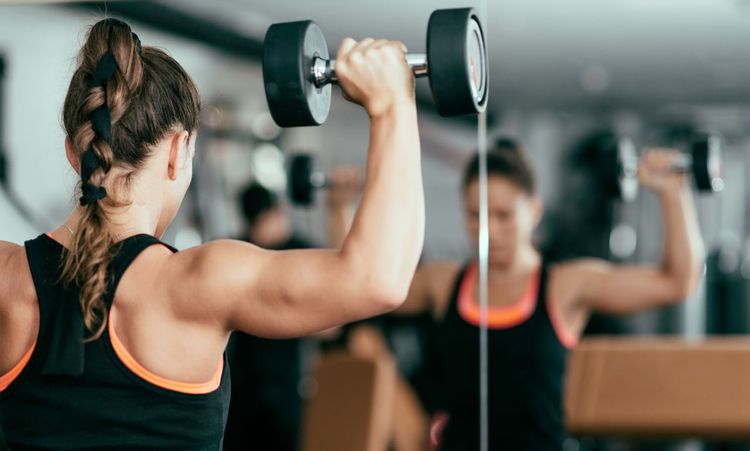
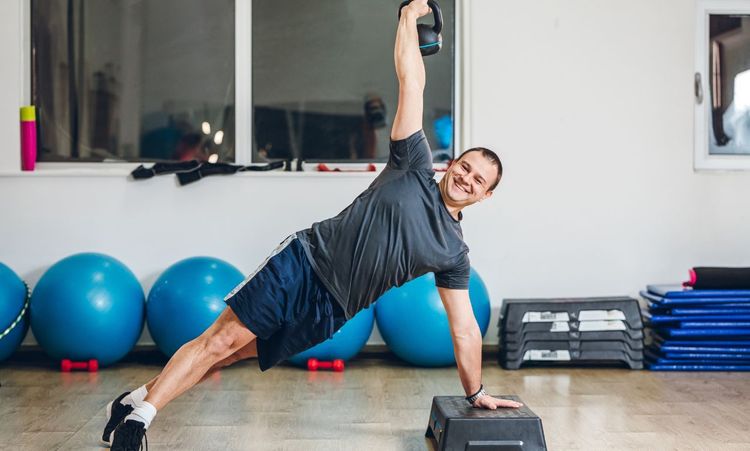
If you've recently started working out, you've probably noticed your legs trembling during squats or your arms shaking while holding a plank. It can feel strange, especially when the movement doesn't seem particularly difficult. The good news is that in most cases, shaking during exercise is a normal response to physical effort rather than a sign that something is wrong.
Why Do Beginners Shake During Exercise?
The most common reason beginners shake during exercise is muscle fatigue combined with a nervous system that is still adapting to new demands. When you challenge muscles that are not accustomed to a specific movement, the communication between your brain and muscles becomes less efficient as fatigue sets in.
Every movement relies on groups of nerve cells called motor units. These motor units activate muscle fibers and help produce force. During exercise, your body recruits more motor units to keep the movement going. As fatigue develops, these signals become less coordinated, which can create visible shaking or trembling.
For beginners, this effect often appears sooner because the body has not yet learned how to perform exercises efficiently. Even bodyweight movements can feel demanding when the muscles and nervous system are still developing strength and coordination.
The Role of Your Nervous System in Muscle Tremors
Many people assume shaking comes solely from weak muscles. While strength plays a role, the nervous system is often the bigger factor.
When you perform a new exercise, your brain must coordinate multiple muscles at once. A squat, for example, requires the hips, glutes, quadriceps, hamstrings, calves, and core muscles to work together. If the movement pattern is unfamiliar, the nervous system must work harder to maintain control.
This is why beginners often shake during exercises that involve balance, stability, or precise positioning. The body is essentially learning a new skill. Over time, these neural pathways become more efficient, and the shaking gradually decreases.
Athletes experience a similar process when learning advanced movements. The difference is that beginners encounter it during basic exercises because everything is relatively new.
Why Shaking Happens During Planks and Static Holds
One of the most common questions among new exercisers involves shaking during planks. Even people who can walk or run comfortably may struggle to hold a plank without trembling.
Static exercises place continuous tension on muscles without allowing them to relax between repetitions. During a plank, the core, shoulders, chest, and lower back remain engaged for an extended period. As fatigue builds, muscle fibers begin to lose coordination, resulting in visible shaking.
The same principle applies to wall sits, yoga poses, and other isometric exercises. Because the muscles stay contracted continuously, fatigue accumulates quickly.
In many cases, shaking during a plank is a sign that the muscles are working near their current capacity. It does not automatically mean the exercise is dangerous or being performed incorrectly.
Common Workout Mistakes That Increase Shaking
While some trembling is normal, certain mistakes can make it worse.
Using weights that are too heavy is one of the biggest causes. Many beginners try to progress quickly and choose loads their muscles cannot control effectively. This places excessive stress on both the muscles and nervous system.
Poor exercise technique can also contribute. When movement patterns break down, stabilizing muscles must work harder to compensate. This extra effort often results in shaking.
Another common issue is skipping the warm-up. Cold muscles and joints do not respond as efficiently to exercise demands. A proper warm-up increases blood flow and prepares the nervous system for activity.
Rushing through workouts can create similar problems. Controlled repetitions typically produce better muscle engagement and reduce unnecessary strain.
Can Dehydration Cause Shaking During Exercise?
Hydration plays a larger role in exercise performance than many people realize.
When the body loses fluids through sweat, electrolyte levels can also decline. Electrolytes such as sodium, potassium, magnesium, and calcium help regulate muscle contractions and nerve signals. If these levels become imbalanced, muscle function may suffer.
Mild dehydration can lead to fatigue, reduced endurance, and muscle tremors. In more severe cases, cramping and dizziness may develop as well.
This does not mean every episode of shaking is caused by dehydration. However, staying properly hydrated before, during, and after exercise helps support normal muscle function and reduces the likelihood of unnecessary fatigue.
The Connection Between Low Blood Sugar and Exercise Tremors
Food provides the energy required for physical activity. When blood sugar levels drop too low, the body may struggle to meet exercise demands.
Some beginners skip meals before workouts because they worry about feeling uncomfortable while exercising. Others train early in the morning without eating anything beforehand. While this approach works for some people, others may experience symptoms related to low blood sugar.
These symptoms can include:
- Shaking
- Weakness
- Lightheadedness
- Sweating
- Difficulty concentrating
The body relies heavily on glucose during physical activity. If energy stores become depleted, performance declines and tremors may become more noticeable.
Eating a balanced meal or snack before exercise can help maintain stable energy levels during training.
Does Shaking Mean Your Muscles Are Growing?
This is one of the most persistent fitness myths online.
Muscle shaking does not automatically indicate muscle growth. Instead, it usually reflects fatigue, nervous system stress, or reduced muscle control under load.
Muscle growth occurs through a process called hypertrophy. This process develops gradually through consistent training, recovery, and proper nutrition. While challenging workouts contribute to growth, the presence or absence of shaking is not a reliable indicator of muscle-building success.
Some highly effective workouts produce little shaking at all. Likewise, significant trembling does not guarantee better results.
A more accurate measure of progress includes increased strength, improved endurance, better exercise technique, and gradual increases in training capacity.
Why Experienced Athletes Sometimes Shake Too
Many beginners assume that shaking disappears permanently once someone becomes fit. In reality, even elite athletes experience muscle tremors under certain conditions.
The difference is that their threshold is much higher.
A trained athlete may not shake during a standard workout, but they can experience trembling when approaching muscular failure, performing heavy lifts, or completing demanding endurance events.
This happens because fatigue affects everyone. Regardless of fitness level, muscles eventually reach a point where maintaining smooth contractions becomes difficult.
The presence of shaking therefore reflects effort more than experience alone. Beginners simply reach that point sooner because their bodies are still adapting.
When Shaking During Exercise May Be a Warning Sign
Most workout-related shaking is harmless. However, there are situations where medical attention may be appropriate.
Warning signs include persistent tremors that continue long after exercise has ended, severe dizziness, loss of balance, confusion, chest pain, or sudden weakness.
Tremors that occur outside of physical activity may also warrant evaluation by a healthcare professional. In rare cases, neurological conditions, medication side effects, or underlying medical issues can contribute to abnormal shaking.
If symptoms seem unusual or progressively worsen, seeking medical advice is the safest approach.
How to Reduce Shaking During Workouts
The most effective way to reduce shaking is to improve overall fitness gradually.
Consistency allows the muscles and nervous system to adapt naturally. Most beginners notice significant improvements within a few weeks of regular training.
Several strategies can help:
Choose manageable weights and focus on proper technique. Prioritize quality movement over lifting heavier loads. Stay hydrated throughout the day rather than waiting until exercise begins. Eat balanced meals that support energy production and recovery. Get adequate sleep, since fatigue can amplify muscle tremors. Increase workout intensity gradually instead of making large jumps in volume or resistance.
Patience is often the missing ingredient. The body learns remarkably quickly when training is approached consistently and sensibly.
How Long Does It Take for Beginners to Stop Shaking?
There is no universal timeline because adaptation depends on age, fitness level, training frequency, and exercise type.
Many beginners notice improvements within two to four weeks. During this period, the nervous system becomes more efficient and movement patterns start feeling natural.
Strength gains also begin to develop, reducing the effort required for previously challenging exercises.
Some shaking may still occur during difficult workouts, but the intensity usually decreases significantly as fitness improves. What feels demanding today often becomes routine after several weeks of consistent practice.
Conclusion
So, why do beginners shake during exercise? In most cases, the answer lies in muscle fatigue and nervous system adaptation. Your body is learning how to coordinate movement, recruit muscle fibers efficiently, and handle physical stress.
While the sensation can be surprising, it is often a normal part of the learning process. With proper training, adequate recovery, good nutrition, and consistent practice, shaking typically becomes less frequent over time. Understanding what causes it can help you approach exercise with greater confidence and avoid mistaking a normal response for a serious problem.